BAIC B30: Everything You Need to Know Before Buying
The BAIC B30 is a spacious SUV designed for everyday practicality. Here's a closer look at what it offers and why it could be worth considering in New Zealand.
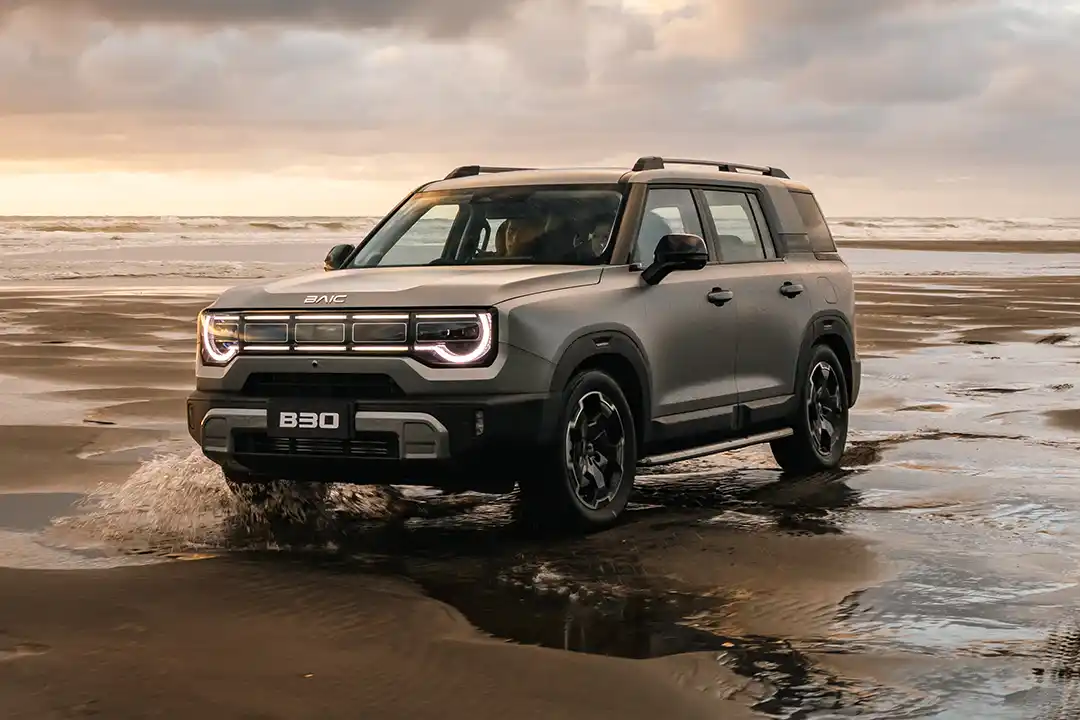
A closer look at BAIC's new SUV, what makes the B30 different, and whether it could be the right fit for New Zealand drivers.
If you're shopping for a new SUV in New Zealand, you're probably noticing that the market has become incredibly competitive.
There are the familiar names, plenty of hybrid options, an ever-growing number of EVs, and now a new generation of brands offering a lot of equipment for the money.
One of the more interesting newcomers is the BAIC B30.
It's a big, boxy SUV with a deliberately rugged look, a choice of petrol and petrol-hybrid powertrains, and a specification list that gives you quite a lot to think about.
But specifications only tell part of the story.
The more useful question is:
Does the B30 actually make sense as an everyday SUV in New Zealand?
What is the BAIC B30?
The B30 is one of BAIC New Zealand's first models, arriving as part of the brand's New Zealand launch in 2026.
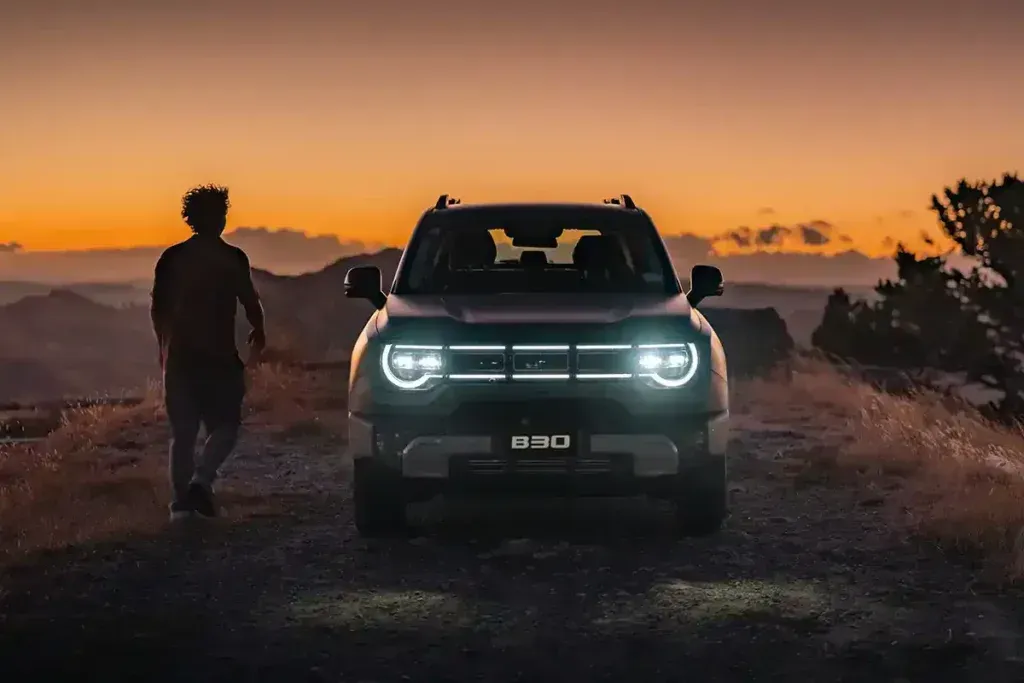
And despite its rugged appearance, I wouldn't describe it as a traditional off-roader.
It's better thought of as a large, practical SUV with an adventurous design.
That's an important distinction.
The B30 has the upright shape, ground clearance and visual presence you'd normally associate with something more capable off-road, but its monocoque SUV construction means it's really designed around everyday road use, family practicality and versatility.
And that's probably where the B30 makes the most sense.
It's bigger than it looks
One of the first things worth understanding about the B30 is its size.
At around 4.73 metres long and 1.91 metres wide, this isn't a small urban SUV.
It's a genuinely substantial vehicle.
That puts it into a different conversation from the compact SUVs that have become so common in New Zealand.
You get a higher driving position and plenty of road presence, but you also need to remember that you're driving a fairly large SUV.
For Wellington drivers, that's something I'd specifically recommend considering during a test drive.
Parking spaces, narrow streets and some of Wellington's older roads aren't always designed with large SUVs in mind.
Fortunately, the B30 comes with technology designed to make that easier, including a 360-degree 3D panoramic camera system and a range of driver-assistance features.
Three B30s to choose from
One of the more interesting things about the B30 range is that you're not simply choosing between different equipment levels.
There are three distinct versions:
B30 Elite Adventure
The entry-level B30 uses a 1.5-litre turbocharged petrol engine producing 138kW and 305Nm.
It sends that power through a seven-speed dual-clutch transmission to the front wheels.
The current advertised price is from $39,990 + ORC, subject to the current offer and availability.
B30 Premium Adventure Hybrid
Step up to the Premium Adventure Hybrid and you get BAIC's petrol-hybrid powertrain.
Combined output is quoted at 246kW and 550Nm, with front-wheel drive.
The current advertised price is from $45,990 + ORC.
B30 Premium Adventure Hybrid AWD
At the top of the range is the Premium Adventure Hybrid AWD.
This version adds all-wheel drive and produces a quoted 301kW and 685Nm.
It's currently advertised from $50,990 + ORC.
That makes the range quite interesting because you're not forced into a hybrid or AWD simply because you want the B30.
There's a genuine choice depending on what you actually need.
Which B30 would I choose?
That really depends on how you drive.
If most of your driving is around town and you want the B30 primarily because you like the design, space and practicality, the entry-level Elite Adventure could make a lot of sense.
The Premium Adventure Hybrid is more interesting if you do a lot of urban driving and want the additional performance and hybrid system.
Then there's the AWD model.
If you're regularly heading away from the city, driving on gravel roads, visiting the ski fields, heading to the beach or simply want the additional traction of all-wheel drive, it's the most versatile option in the range.
But I wouldn't buy the AWD simply because it sounds better.
Think about whether you'll actually use it.
The B30's biggest strength: equipment
This is where the B30 makes a strong argument for itself.
Even the range has a substantial amount of technology and convenience equipment.
All the B30 models includes features such as:
- Wireless Apple CarPlay
- Adaptive cruise control
- Lane-keeping assistance
- Blind-spot detection
- Lane-change assistance
- Rear cross-traffic alert and braking
- A 360-degree 3D panoramic camera
- Wireless phone charging
- Power tailgate
- Heated front seats
- Electric front-seat adjustment
- Fold-flat rear seats
- Digital instrumentation
The higher-specification AWD model adds features including ventilated front seats and driver-seat memory.
That's a lot of equipment for an SUV in this price range.
And this is probably one of the areas where the B30 is going to surprise people who haven't seen one in person.
What is it like inside?
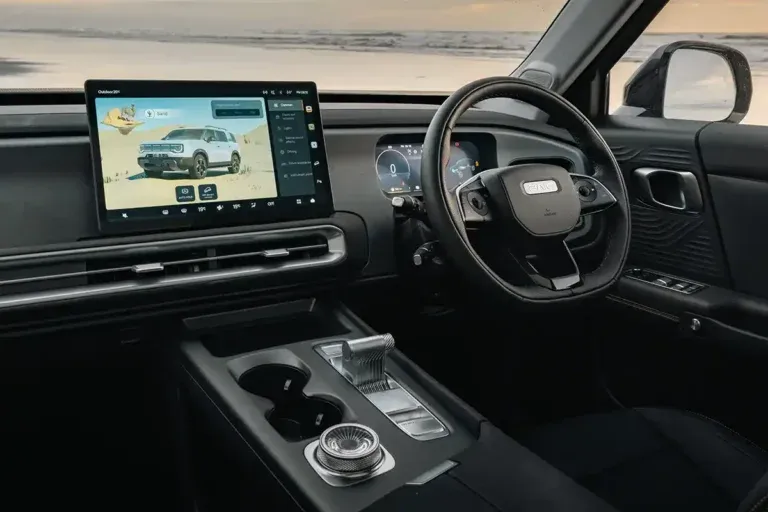
The interior follows the same philosophy as the exterior.
It's modern, technology-focused and designed to feel more substantial than the price might initially suggest.
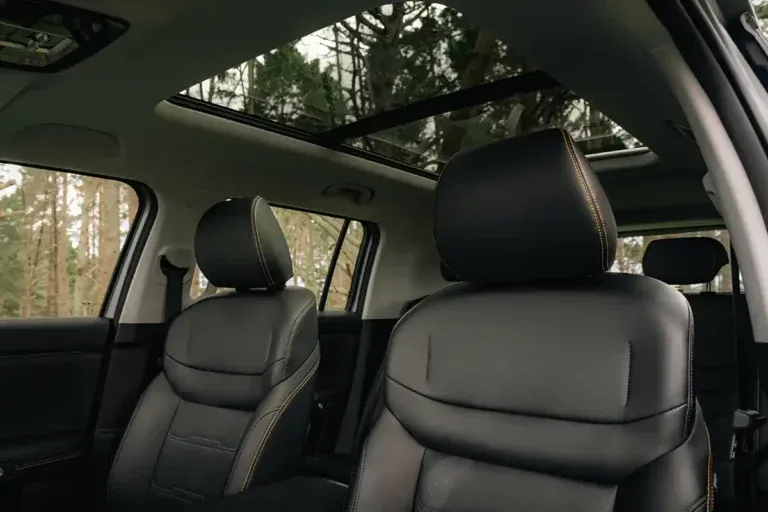
The B30 gets leatherette seating, electrically adjustable front seats and a range of technology aimed at making everyday driving easier.
The rear seats can fold in a 4/6 configuration and fold flat, which adds to the vehicle's practicality.
That's important because a large SUV should actually be useful.
If you're buying something this size, you want to be able to use the space.
Whether that's carrying passengers, luggage, sports equipment, shopping or whatever else life throws at you.
What about fuel economy?
This is where the hybrid versions become particularly interesting.
BAIC quotes the Premium Adventure Hybrid at around 6.2–6.3L/100km combined, depending on specification and test conditions.
The official figures are laboratory test results, so real-world consumption will vary with driving style, traffic, weather, passengers and load.
That's something I always think is worth remembering when comparing vehicles.
Don't buy a car because one number on a specification sheet looks impressive.
Think about how you'll actually use it.
If you spend most of your time driving around Wellington, your real-world consumption will be different from someone spending their weekends cruising open highways.
Is the B30 an off-roader?
This is probably one of the biggest misconceptions I'd want to clear up.
The B30 looks like it wants to go off-road.
And that's part of its appeal.
But I wouldn't buy one expecting it to behave like a traditional ladder-frame 4WD.
The AWD version is certainly the one I'd look at if you regularly encounter gravel, snow, muddy access roads or other conditions where additional traction is useful.
But for most owners, the B30 is going to spend the vast majority of its life on sealed roads.
And that's completely fine.
You don't need to use every capability of a vehicle every day.
Sometimes you just want an SUV that looks like it could handle an adventure when the weekend comes around.
Is the B30 suitable for Wellington?
I think this is where the B30 gets particularly interesting.
Wellington has a fairly unique combination of city driving, hills, tight parking, motorway commuting and easy access to some pretty adventurous roads outside the city.
The B30's size gives you plenty of presence and interior space, while the driver-assistance technology can help when you're manoeuvring something this substantial.
I'd still recommend spending some time driving one around Wellington before buying.
Don't just drive around the block.
Try parking it.
Drive it through the city.
Get it onto the motorway.
See how comfortable you are with the width.
And if you're considering the AWD version, think about where you'd actually use it.
B30 vs buying an established brand
This is probably the biggest question for many buyers.
For roughly $40,000–$51,000 before on-road costs, you're entering a very competitive part of the market.
There are plenty of established brands offering SUVs around this price point.
So why consider BAIC?
For me, the answer comes down to value and specification.
You're getting a lot of vehicle for the money, particularly when you look at the equipment levels and the hybrid options.
But there's also something to be said for being realistic about buying from a newer brand.
If you're someone who wants a vehicle from a brand you've known for decades, that's a perfectly reasonable preference.
If you're more interested in what you're getting for your money, the B30 becomes much more interesting.
That's exactly why I'd recommend comparing one properly rather than dismissing it because the badge isn't familiar.
What about the warranty?
The B30 comes with a 7-year, unlimited-kilometre vehicle warranty for private use.
The hybrid versions also receive an 8-year, unlimited-kilometre traction battery warranty.
BAIC also lists seven years of roadside assistance.
For someone considering a newer automotive brand, that sort of warranty coverage is worth paying attention to.
As always, I'd recommend reading the actual warranty terms and conditions before purchasing.
So, who is the B30 for?
I'd put the B30 on your shortlist if you're looking for:
- A genuinely spacious SUV
- Strong value for money
- A higher driving position
- Plenty of technology
- Petrol or hybrid powertrain options
- Optional AWD
- A distinctive alternative to the usual SUV choices
- A new vehicle with a long warranty
I'd be less interested if your priority is a small, easy-to-park city car.
The B30 is simply too large for that to be its main selling point.
But if you want a big SUV without immediately moving into significantly more expensive territory, it's a very interesting proposition.
My advice before buying a B30
Don't buy it from a specification sheet.
Come and drive one.
Sit in the driver's seat.
Try the rear seats.
Look at the boot.
Connect your phone.
Test the cameras.
Try parking it.
And, most importantly, think about whether the B30 fits your life.
That's what a test drive is for.
You don't need to arrive at the dealership knowing exactly what you want.
You can come in comparing the B30 with something else.
You can ask questions.
And you can decide that it's not for you.
That's all part of the process.
Want to see the B30 in person?
I'm based at Armstrong's on Kent Terrace in Wellington, working with the BAIC and ARCFOX brands.
If you're considering a B30, I'd be happy to show you around one, arrange a test drive, or simply talk through the different versions and work out which one makes the most sense for you.
There's no need to have everything figured out before you get in touch.
Thinking About the B30?
Whether you're ready for a test drive or you're still working out whether the B30 is right for you, send me an enquiry and I'll get back to you.
Interested in this vehicle?
Have a question, want to arrange a test drive, or just want to know if this vehicle is right for you? Send me an enquiry and I'll get back to you.